
|
Product Details:
|
| Valve Type: | Through Conduit Expanding Gate Valve, Slab Gate | Size: | 4 Inch (DN100) |
|---|---|---|---|
| Pressure Class: | Class 1500LB (PN250) | Body Material: | ASTM A516 Gr70 + AISI 4130 Trim |
| Body Construction: | Fully Welded / Bolted Body Options | End Connection: | Butt Weld (BW) / RF Flanged Options |
| Gate Design: | Parallel Expanding Gate With PTFE Seats | Bore Type: | Full Bore (Through Conduit) |
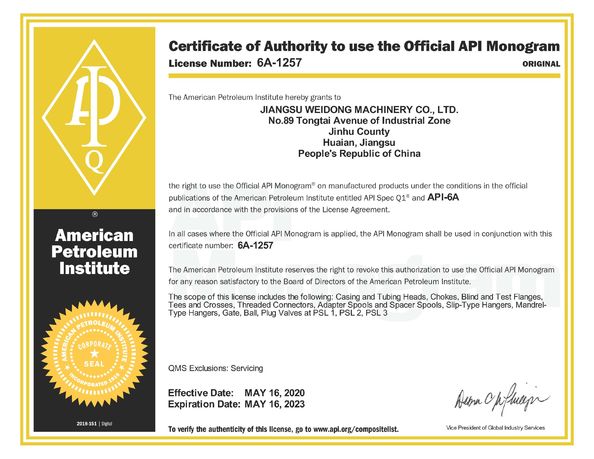
| Operation: | Gear Operator With Handwheel | Design Standard: | API 6D / ASME B16.34 |
| Fire Safe Certified: | API 6FA / BS 6755 Part 2 | ||
| Highlight: | A516 Gr70 expanding gate valve,4 inch slab gate valve,1500LB high pressure gate valve |
||
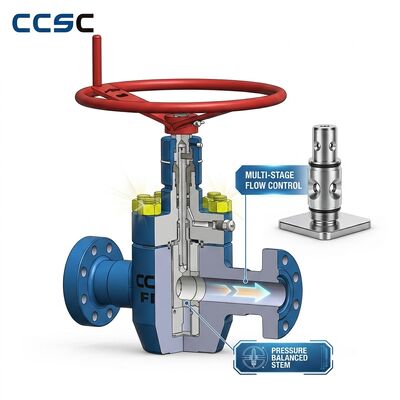
This through conduit expanding gate valve, also known as a slab gate valve, is designed for critical pipeline isolation service in long-distance oil and gas transmission pipelines. The 4-inch Class 1500LB valve features a full bore through conduit design where the gate opening precisely matches the internal pipe diameter when fully open, ensuring zero flow restriction and allowing unimpeded passage of pipeline inspection gauges (pigs) and cleaning tools. The parallel expanding gate mechanism uses line pressure to energize the downstream seat seal while a mechanical wedge action provides positive upstream sealing. API 6D compliant, this valve is ideal for crude oil pipelines, natural gas transmission, refined product lines, and underground storage cavern isolation.
| Parameter | Specification |
|---|---|
| Valve Type | Through Conduit Expanding Gate Valve (Slab Gate) |
| Size | 4 Inch (DN100) |
| Pressure Class | Class 1500LB (PN250) |
| Body Material | ASTM A516 Gr70 Forged/Welded Carbon Steel |
| Gate Material | AISI 4130 Alloy Steel with ENP Coating |
| Seat Type | Spring-Energized PTFE Lip Seal with Metal Backup |
| Seat Material | Virgin PTFE with 25% Glass Fill (Nylon/PEEK Options) |
| End Connection | Butt Weld per ASME B16.25, BW Ends Standard |
| Bore Type | Full Bore, Through Conduit |
| Operation | Bevel Gear Operator (Encased, Grease Lubricated) |
| Stem Material | AISI 4140 with ENP + PTFE Coating |
| Body Design | Two-Piece Bolted Body with Spiral Wound Gasket |
| Cavity Vent/Drain | 1/2" NPT with Plugged Valve and Bleed Tube |
| Design Standard | API 6D 24th Edition / ASME B16.34 |
| Fire Safe | API 6FA / BS 6755 Part 2 Certified |
| Hydrostatic Test | Shell: 3750 PSI, Seat: 2750 PSI (Liquid) + 80 PSI (Gas) |
| Temperature Range | -46°C to +121°C (Standard PTFE), up to +200°C (PEEK Option) |
Q: Why is a through conduit design important for pipeline valves?
A: Through conduit ensures the valve bore matches the pipe ID exactly when open. This is critical for: (1) allowing pigs to pass through for pipeline cleaning and inspection, (2) eliminating turbulence and pressure drop at the valve, (3) preventing sediment accumulation in the valve cavity, and (4) avoiding product mixing between batches in multi-product pipelines. It is a mandatory requirement per API 6D for pipeline isolation valves.
Q: What is DBB (Double Block and Bleed) and when is it required?
A: DBB means that with the valve closed, both the upstream and downstream seats provide independent sealing, and the body cavity can be vented/drained between them. This allows verification that neither seat is leaking before maintenance activities. DBB is required for positive isolation where workers will be downstream of the valve, per OSHA lockout/tagout regulations and many operator safety standards.
Q: Can this valve be installed in any orientation?
A: Through conduit gate valves can be installed in horizontal or vertical pipeline orientations. For vertical stem orientation (stem pointing up), standard configuration applies. For horizontal stem orientation, special stem and actuator support considerations are required—please specify installation orientation when ordering.
Contact Person: Mr. Jason
Tel: +86 18672866805


 English